Yin-Rén-Yang-Rén
The yin below and the yang above.
Upper and lower each in their own body, and things have rites between them.
1
He walks about on tiptoe.
He puts his grandfathers behind him.
Reaching up is how a man sends his ancestors to the back.
2
The eyes solemn, the feet solemn,
and a thread of red heartwood running through it.
The reverence came out of somewhere.
3
He paints the likeness and gets the shape.
Trusted, and nothing comes of it.
Practising the gestures faster is not the thing.
4
Peacock and wild goose, the way they hold themselves.
Useful for going up the steps.
What can be copied is what governs.
5
He harbours the turning-away, he snaps the ladle.
He is fined nine arrows for it.
The salary goes where the manners went.
6
Ranked like the scales of a fish, each after each,
and then given out wide.
By this the lord goes up as far as heaven.
7
Outside the rite, and unafraid.
Fear comes in.
Everyone lets go of a man who fears nothing.
8
The cap is filthy and the shoe is whole.
The cap still goes on the head.
What is worn out on top is still on top.
9
[Appraisal nine is malformed in the transmitted text.
Its sense survives in Sima Guang’s commentary: a cap worn
where there is no head beneath it. The slot is left open.]
THE IMAGE
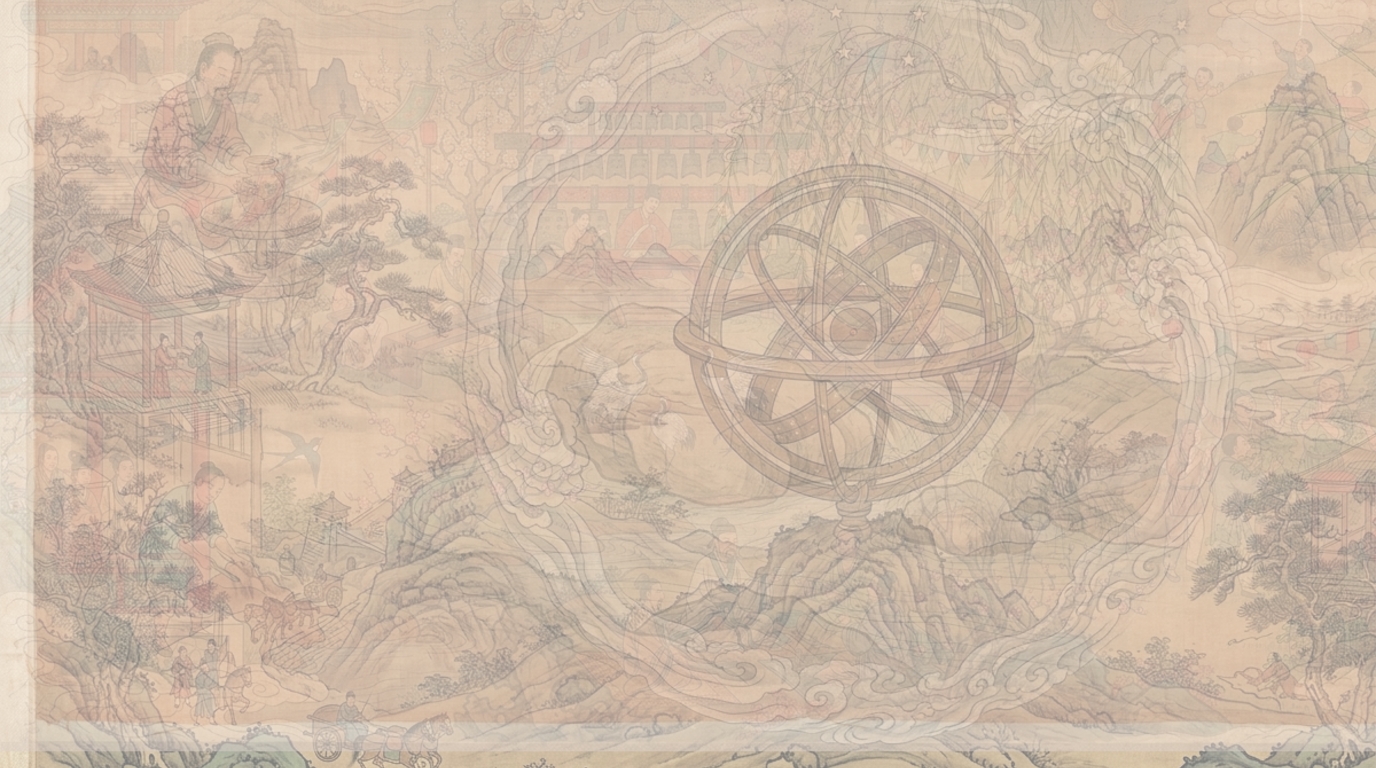
An imperial ceremonial temple courtyard where dignitaries, magistrates, and scholars clad in embroidered ceremonial robes perform synchronized rites of deference, holding jade sceptres and bronze incense burners with dignified grace.
THE COMMENTARY
Conduct matters. The situation may depend less on what you feel privately than on whether you understand the forms, boundaries, roles, and gestures through which respect becomes visible.
Rites are not empty manners when they arise from genuine reverence. Good form allows people of different ranks, histories, or relationships to meet without confusion. But ceremony without inner substance quickly becomes imitation, performance, or social ambition.
Attend to how things should be done, especially where relationship depends on mutual recognition. Do not despise form, but do not confuse mastering the gestures with possessing the spirit that originally gave them meaning.
This figure is one of 81 in Taixuanjing for Today, a book by Joe Perez that renders Yang Xiong’s Canon of Supreme Mystery in original verse, with expanded commentary, essays, and full instructions for casting the oracle yourself.